
WELCOME TO KBY
“AND WITH JOY YOU SHALL DRAW FORTH
ISAIAH 12:3
WATER FROM THE FOUNTAIN OF SALVATION!”
A great view of mount Sinai
WELCOME
Kehilat Beta Yisrael
Montréal
CALENDER OF IMPORTANT FEASTS:
KEHILAT BETA YISRAEL HOLIDAYS 5782
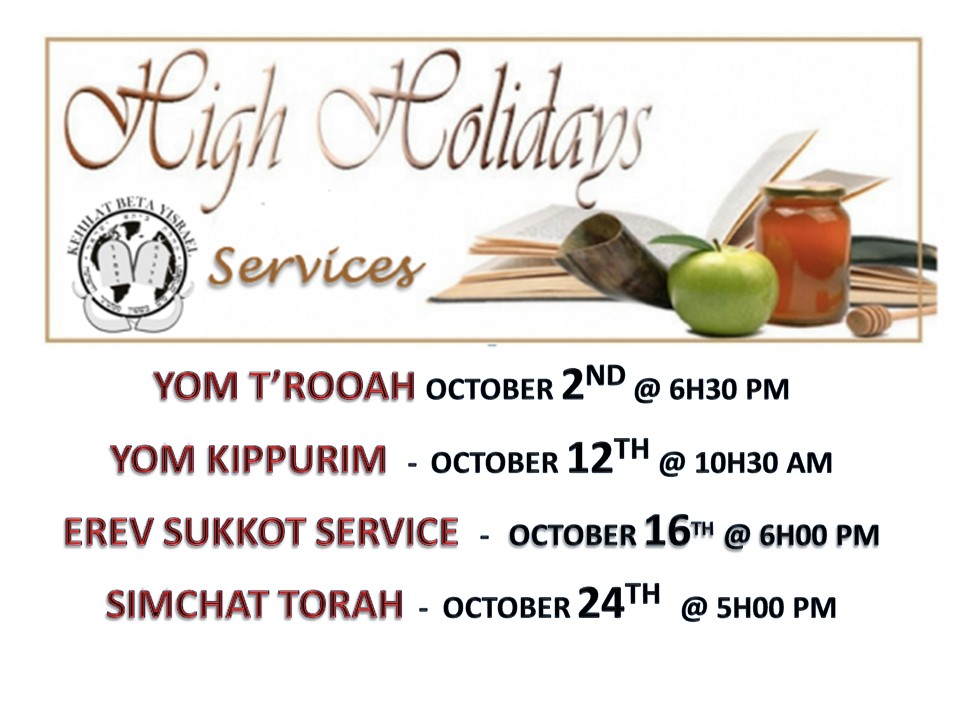

For attending the festival you must call to reserve.
For further details please call or send us an e-mail.
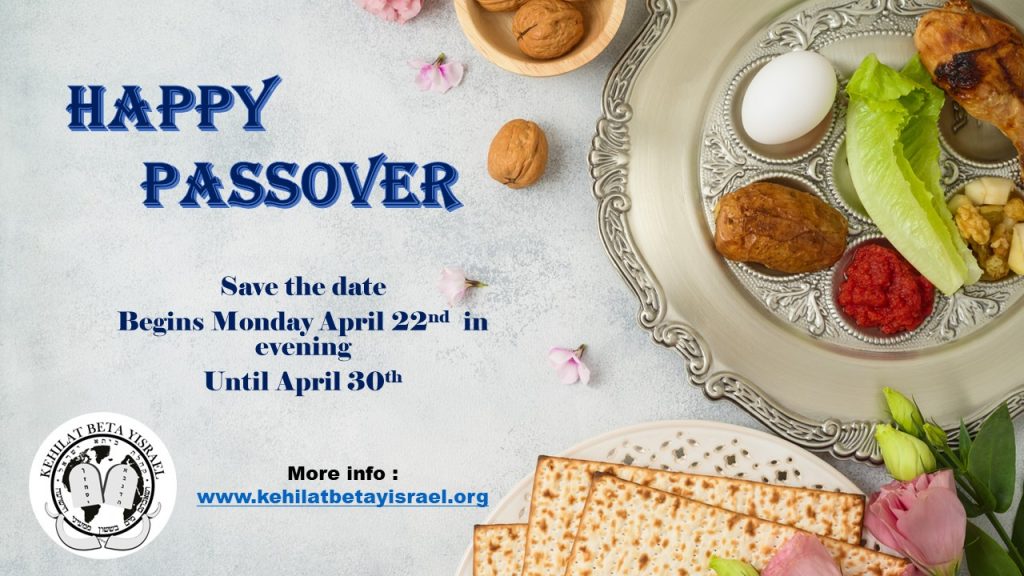
Pesach FEAST
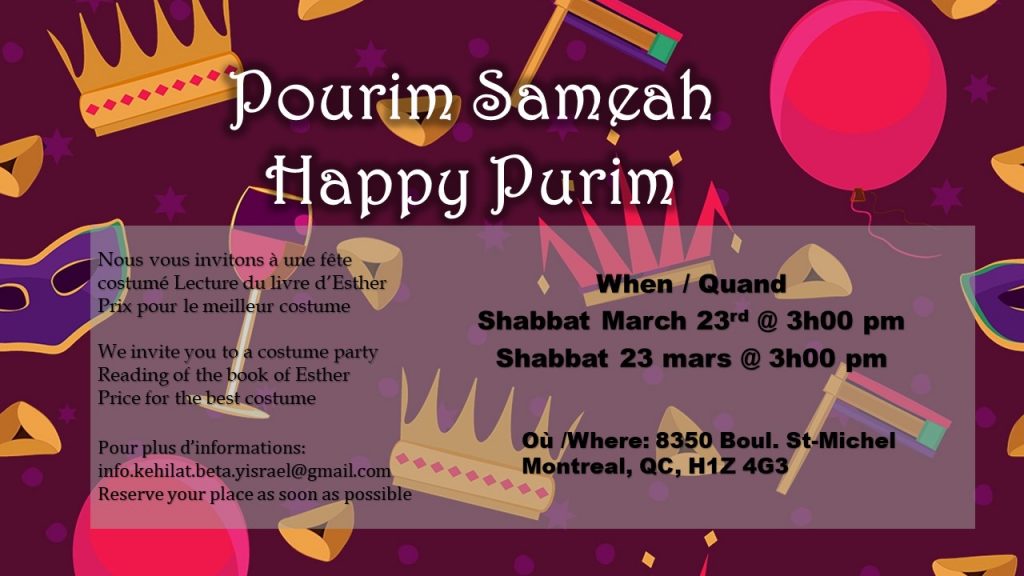
Purim FEAST
About KBY
We are young and dynamic community We are young and dynamic community of believers whose uniqueness is that we’re both Jew and the nations who are bound together in the worship and praise of the One and only Creator, the G-d of Avraham, Yitzhak and Yaakov, the H-ly One of Yisrael (blessed is He) in light of the love of our Moshiach Yeshua through the traditions and customs of the Torah with central theme of “Teshuvah”.
And as Isaiah Hanavi said “Also the sons of the stranger, that join themselves to the LORD, to serve him, and to love the name of the LORD, to be his servants, every one that keepeth the sabbath from polluting it, and taketh hold of my covenant. Even them will I bring to my holy mountain, and make them joyful in my house of prayer: their burnt offerings and their sacrifices shall be accepted upon mine altar; for mine house shall be called a house of prayer for all people”. (Is. 56:6-7)
Who we are
Linking the two sides. We’re groups of Jews and the Nations that worship in togetherness of spirit the G-d of our fore fathers, G-d of Abraham, Isaac and Yaakov, the H-ly One of Yisrael blessed be He. We believe that the H-ly One (Blessed be He) in His awesomeness has reveal His rules, regulations and guardians into the hearts of all men after the floods of Noah which is the basic laws that all men should live by, this guardians is commonly called Noahide laws.
On the other hand we see the ladder of holiness or ladder of intimate relationship through Yaakov’s dream that the H-ly One (blessed be He), He’s reveling his revelation constantly and calling everyone into a higher level of intimate relationship with Him and NOT religion but rather RELATIONSHIP. So therefore everyman if only willing possessed the ability to climb step by step up this ladder of h-liness and righteousness into an intimate, personal relationship and to become g-dlike or rather to be the mirror reflection of G-d in a closer relationship with the G-d Head.
As the H-ly One (blessed be He) called our fathers from the Nations to bring them a step higher and closer to Himself in the ladder of relationship and by choosing Yaakov over Esau making Yisrael the Light bearer and given us the 10 words to guardYisrael, a witness of the Great Light of consciousness.
So did Adonai took a tribe from the 12 tribes of Yisrael which is Levi and He draw them closer to Himself a step higher than the rest of the tribes in the ladder of intimate relationship with Him. Then the H-ly One (blessed be He) took the Kohath family from the tribe of Levi to bring them a step higher in the ladder of intimate relationship with Him.
The H-ly One (blessed be He) went further by taking a Man from the sons of Amram, Moshe to bring him a further step higher in the ladder of intimate relationship with Him together with his brother Aaron to be his spokesman who later became the High priest.
The H-ly One (blessed be He) went further by taking a Man from the sons of Amram, Moshe to bring him a further step higher in the ladder of intimate relationship with Him together with his brother Aaron to be his spokesman who later became the High priest.
The uniqueness of Kehilat Beta Yisrael is bringing the nations the sons of Noah to be engraved in the tree of the commonwealth of Yisrael and a step by step higher in the ladder of personal and intimate relationship with the G-d of our forefathers Abraham, Yitzhak and Yaakov.
At Kehilat Beta Yisrael everyone has the freedom to grow up or rather climb this ladder of intimate relationship one step at a time and at your own space with the basic guardian been the 7 laws of Noah which the Creator has written in the heart of all men and if you desire and willing to grow more by taking upon yourself more responsibilities to clamp higher up the ladder of intimacy in relationship with the H-ly One then glory be to Him.
At Kehilat Beta Yisrael everyone has the freedom to grow up or rather climb this ladder of intimate relationship one step at a time and at your own space with the basic guardian been the 7 laws of Noah which the Creator has written in the heart of all men and if you desire and willing to grow more by taking upon yourself more responsibilities to clamp higher up the ladder of intimacy in relationship with the H-ly One then glory be to Him.
Our Vision

Our vision is to be the light that shines in darkness by proclaiming freedom and liberty in relationship with the H-ly One (blessed be He) over slavery and bondage of religion.
Our Purpose

The purpose of KBY is to bring both Jews and Non-Jews together in oneness of spirit in the public worship of G-d according to the teaching, guardian and the principles of the Torah.